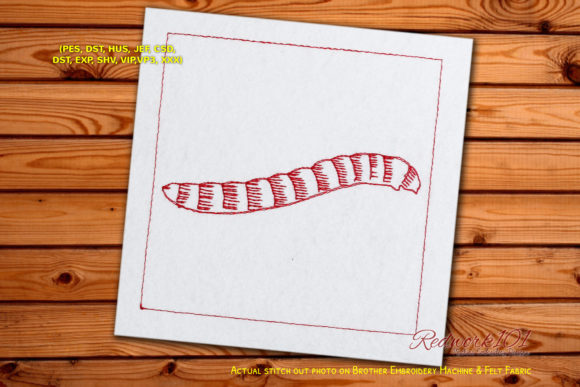
Mini Mealworm: A Designer's Take on Tiny Bug Embroidery
When I first pulled up the Mini Mealworm design on my screen, my immediate reaction was one of quiet appreciation for its simplicity. In the world of machine embroidery design, it is easy to get lost in overly complex files that promise the world but deliver a bird's nest of thread breaks and puckering. This file, however, feels different. It exudes a playful, slightly quirky mood that fits perfectly into the current trend of cottage-core aesthetics and nature-inspired embroidery. As a designer who spends more time at the hoop than away from it, I look for files that translate well from digital preview to physical finished product, and this little bug seems to have that potential.
The visual personality of the Mini Mealworm is unpretentious. It does not try to be a hyper-realistic entomological study; instead, it leans into a charming, stylized representation that works beautifully for baby embroidery or whimsical custom apparel. The shape is compact, suggesting it would sit comfortably in smaller hoops without losing its identity. For those of us running a craft business or managing an Etsy seller account, versatility is key. A design that can pivot from a nursery decor item to a trendy patch on a denim jacket is gold. This design feels like it belongs in that versatile category, offering a high return on investment for the time spent hooping and stitching.
Real-World Application: From Screen to Sweatshirt
To truly evaluate this embroidery file, I imagined a specific real-life scenario: a custom order for a local boutique needing a run of organic cotton sweatshirt embroidery for their autumn collection. The client wanted something subtle but distinct, avoiding the loud, oversized graphics that dominate the market. Here, the Mini Mealworm shines. Placed on the left chest or near the cuff, it adds a touch of personality without overwhelming the garment. The scale of the bug suggests it would also work exceptionally well as a tote bag design, perhaps repeated in a scattered pattern or paired with a small botanical element.
However, the product description notes an important detail regarding the "Box Stitch." It states that the box shown in the picture is optional and often a different color unless part of the design itself. This is a crucial observation for any professional. If you are aiming for a clean, floating look on a textured fabric like a waffle knit or a heavy fleece, skipping the border stitch might be the better aesthetic choice. Conversely, if you are creating an embroidered patch to be ironed on later, utilizing that outer box could provide a necessary boundary for cutting or merrow edging. The ability to skip colors directly in your machine software gives you, the operator, control over the final look, allowing you to adapt the Mini Mealworm to fit specific brand guidelines or customer requests.
Navigating Fabric Challenges and Stitch Density
While the charm of this Bugs category design is evident, practical execution requires caution. Small designs often hide pitfalls related to stitch density. If the fill areas are too dense for the size of the worm, the result can be a stiff, cardboard-like patch that ruins the drape of a soft t-shirt. Before committing to a full production run, I strongly advise testing the design on scrap fabric that matches your final material. Pay close attention to how the satin stitch columns lay down. Are they smooth, or do they show gaps? Is the running stitch outline crisp, or does it sink into the pile of a towel?
Fabric choice is paramount. On thin fabric or stretchy knits, a robust stabilizer is non-negotiable. The Mini Mealworm likely has enough detail that shifting during the stitch-out could ruin the alignment of its segments or antennae. For dark fabrics, consider whether the provided thread colors offer enough contrast. Sometimes, a design looks vibrant on a white background in a printable mockup but gets lost on navy blue. You may need to manually adjust the thread chart in your digitizing software or embroidery machine to ensure the bug pops. Additionally, be wary of placing this on curved surfaces like caps unless you are experienced with cap framing; the small details might distort if the fabric tension isn't perfect.
Commercial Viability and Brand Consistency
For the digital embroidery file seller or the small shop product creator, consistency builds trust. If you sell this as part of a set of insect-themed design assets, ensure that the Mini Mealworm matches the stitch style and complexity of the other bugs in the collection. Customers appreciate when a series feels cohesive. This design's straightforward nature makes it an excellent candidate for holiday embroidery gifts—think Halloween treats bags or Easter basket accents—where speed and reliability are just as important as cuteness.
Visual appeal directly impacts perceived value. A clean, well-stitched Mini Mealworm elevates a simple pillow cover into a boutique item. It signals to the buyer that care was taken in the creation process. However, if the tiny corners turn into thread blobs due to poor tension or incorrect stabilizer choice, it undermines that professionalism. Always inspect small details closely. Does the head connect smoothly to the body? Are the legs distinct? These micro-elements determine whether the piece looks like a high-end handmade product or a rushed craft fair find.
Final Verdict and Designer Notes
In conclusion, the Mini Mealworm is a promising addition to any embroiderer's library, particularly for those focusing on personalized gift markets or light commercial embroidery. Its strength lies in its adaptability and charming simplicity. However, like any tool, its effectiveness depends on the skill of the user and the preparation of the materials.
Before launching into your next embroidery project, keep these practical notes in mind:
- Test First: Always stitch a sample on scrap fabric identical to your final project material to check for puckering or registration issues.
- Check the Box: Decide early whether to use the optional box stitch based on whether you need a border for a patch or a clean look for apparel.
- Color Contrast: Verify that your chosen thread colors stand out against your specific fabric background, especially for dark garments.
- Stabilizer Strategy: Match your stabilizer weight to the fabric type; heavier cuts may be needed for stretchy knits to maintain shape.
- Licensing Clarity: Since specific license terms were not detailed in the brief description, confirm with the vendor whether this file is cleared for commercial sale of finished items or digital redistribution.
- Hoop Confirmation: Ensure your available hoop sizes accommodate the design dimensions, keeping in mind that smaller hoops limit placement options on large garments.
By approaching the Mini Mealworm with a critical eye and a prepared workspace, you can transform a simple digital file into a delightful physical object that delights customers and enhances your portfolio. It is a reminder that in embroidery, sometimes the smallest designs carry the biggest impact when executed with precision and care.