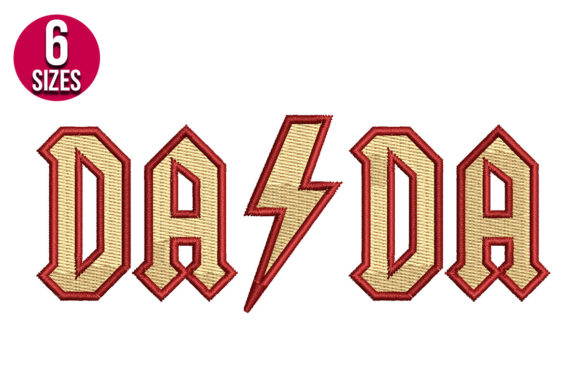
Dada: A Professional Review for Branded Merch and Patches
As an embroidery designer who spends countless hours digitizing and testing files for commercial use, I approach every new machine embroidery design with a critical eye. It is not just about whether a pattern looks cute on a screen; it is about how it performs under the needle, how it wears after fifty washes, and how it elevates a brand's identity. Today, I am reviewing Dada, a design centered around the word "dada." While the product description highlights its potential as a lovely gift for a father or an embellishment for new dads, my focus here is strictly on its viability for small business merchandise, branded patches, and professional apparel decoration.
Visual Personality and First Impressions
The first thing that strikes me about Dada is its inherent warmth. The typography suggests a blend of playful and classic aesthetics, which is crucial when selecting design assets for a boutique or a creative studio. It does not scream corporate rigidity; instead, it offers a handmade feel that resonates with modern consumers who value authenticity. For a bakery, a florist, or a local pet brand looking to create a line of "family-friendly" merchandise, this visual personality is gold. It feels rustic yet premium, capable of bridging the gap between a casual home craft and a polished commercial product. However, because it relies on lettering, the specific font weight and spacing will dictate its success across different applications.
Real-World Business Applications
When evaluating Dada for small business merch, the possibilities extend far beyond a simple baby gift. Imagine a high-end children's boutique using this as a chest logo accent on organic cotton onesies or as a sleeve detail on toddler tees. The design could serve as a powerful tool for brand identity, signaling that a business cares about family values and personal connection.
For service-based businesses, such as a family-oriented café or a daycare center, Dada could be transformed into a high-quality embroidered patch. Sewn onto staff aprons or uniforms, it adds a touch of approachability to the team's look. In the realm of custom apparel, this design shines on tote bags. A canvas tote featuring Dada makes for an excellent customer gift during Father's Day promotions or as part of a welcome kit for new parents joining a community group. The versatility of the design allows it to function as a standalone statement piece or a subtle branding element on hats and caps.
Technical Performance and Stitch Considerations
From a technical standpoint, working with text-based Embroidery files requires vigilance. The success of Dada in a commercial setting depends heavily on stitch density and thread management. If the design features fine lines or tight curves within the letters, it may pose challenges on textured fabrics like pique polo shirts or heavy canvas. High stitch density can lead to puckering if the proper stabilizer is not used. I strongly advise running a test stitch-out on the actual fabric intended for production before committing to a large run.
Furthermore, the choice of thread colors will dramatically alter the perception of the brand. While pastels might work for a nursery theme, a bold navy or charcoal thread could elevate Dada for a more sophisticated men's lifestyle brand. It is essential to check the contrast between the thread and the garment color, especially on dark uniforms where visibility is key.
Strategic Placement and Limitations
Not every surface is suitable for every design. When considering Dada for cap embroidery, one must be cautious. Curved surfaces distort linear text, and if the lettering in Dada is intricate, it may lose legibility on the front panel of a structured hat. Similarly, for very small embroidered patch applications, such as a label on a sock or a tiny tag on a plush toy, the details might merge together.
Items that undergo frequent washing, like kitchen aprons or gym bags, require robust stitching. If the machine embroidery design has long satin stitches without adequate tacking down, they may snag or fray over time. Therefore, for apron embroidery or work shirts, ensure the digitization includes sufficient underlay and secure turn points. Always verify the recommended hoop size to ensure the design fits comfortably without needing excessive re-hooping, which can misalign patterns on multi-item orders.
Enhancing Brand Value and Customer Trust
Incorporating Dada into your product line can significantly impact customer trust and recognition. A well-executed embroidered item signals quality and attention to detail. When a customer receives a tote bag or a shirt with crisp, clean lettering, it reinforces the professionalism of the handmade product or the retail brand. This visual consistency helps in building a loyal customer base that associates your brand with high-quality goods. Moreover, unique designs like this can drive buyer engagement on social media, where users love to share personalized or aesthetically pleasing items.
Essential Designer Notes for Production
Before integrating Dada into your commercial embroidery workflow, adhere to these practical steps to ensure a flawless finished product:
- Test in Monochrome: Stitch the design in black and white first to evaluate the structure and spacing without the distraction of color.
- Scale Verification: Check if the design holds up at small patch sizes. Reduce it to 50% on your screen and look for potential merging of letters.
- Fabric Testing: Always test on the real fabric you plan to sell. Fabric texture can hide or highlight flaws in the stitching.
- Stabilizer Selection: Match your stabilizer to the fabric weight. Cut-away stabilizers are often best for garments that will be washed frequently.
- Mockup Creation: Generate a printable mockup for client approval to manage expectations regarding size and placement.
- License Confirmation: Since this is for business use, confirm the commercial licensing terms. The description notes it comes with multiple formats, but explicit permission for resale or mass production must be verified.
Finally, while the product description mentions that this digital embroidery file comes with multiple formats, it does not specify exact stitch counts or compatible hoop dimensions. Do not assume these details. Contact the vendor or check the included documentation to ensure the file matches your machine's capabilities. By taking these precautions, Dada can transform from a simple digital file into a cornerstone of your brand's merchandise strategy, offering both emotional resonance and professional durability.